
Skip to content
Water damage emergency? Calls answered 24/7(208) 877-4177
Huckleberry Restoration Call (208) 877-4177
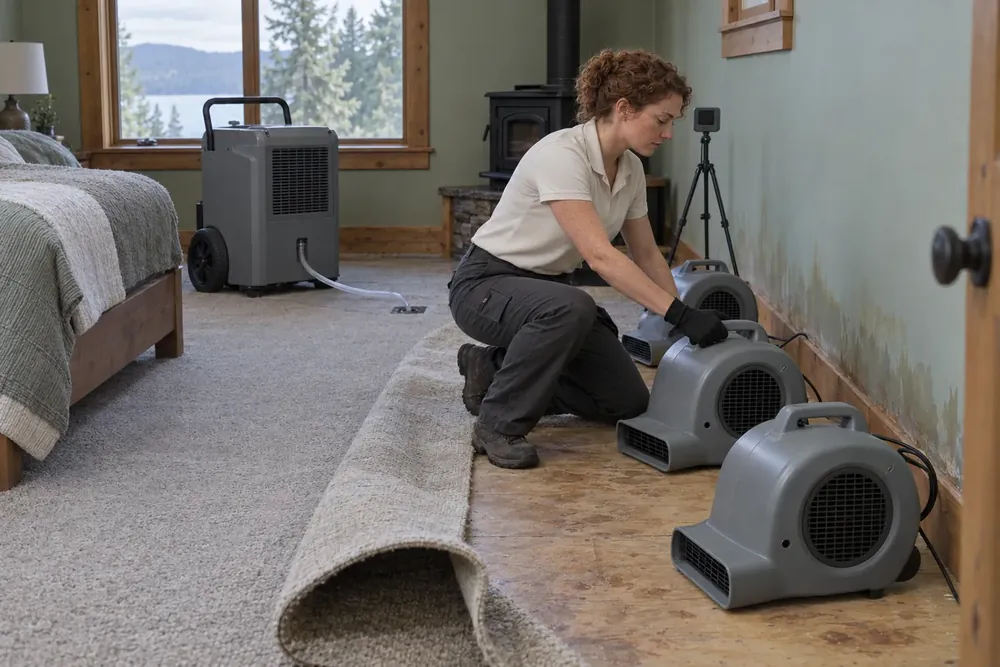
Technician kneeling to position an air mover on a bedroom subfloor beside a dehumidifier and folded carpet

Post Falls, Idaho · Restoration services

Structural Drying & Dehumidification in Post Falls, ID

Our local restoration professionals dry wet framing, sill plates and subfloors in Post Falls, ID with air movers and dehumidifiers. Structural drying pairs controlled airflow with moisture readings so the work reaches water held inside materials, beyond the puddles on the floor.

  • Calls answered 24/7
  • Material moisture checks
  • Written drying scope

Moisture checks, airflow and dehumidification

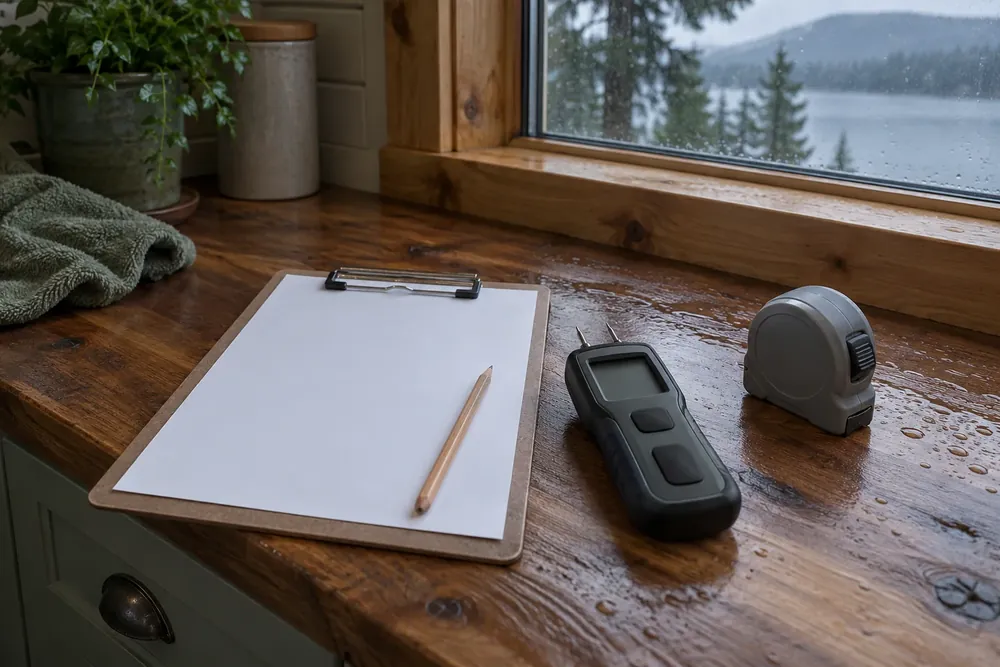
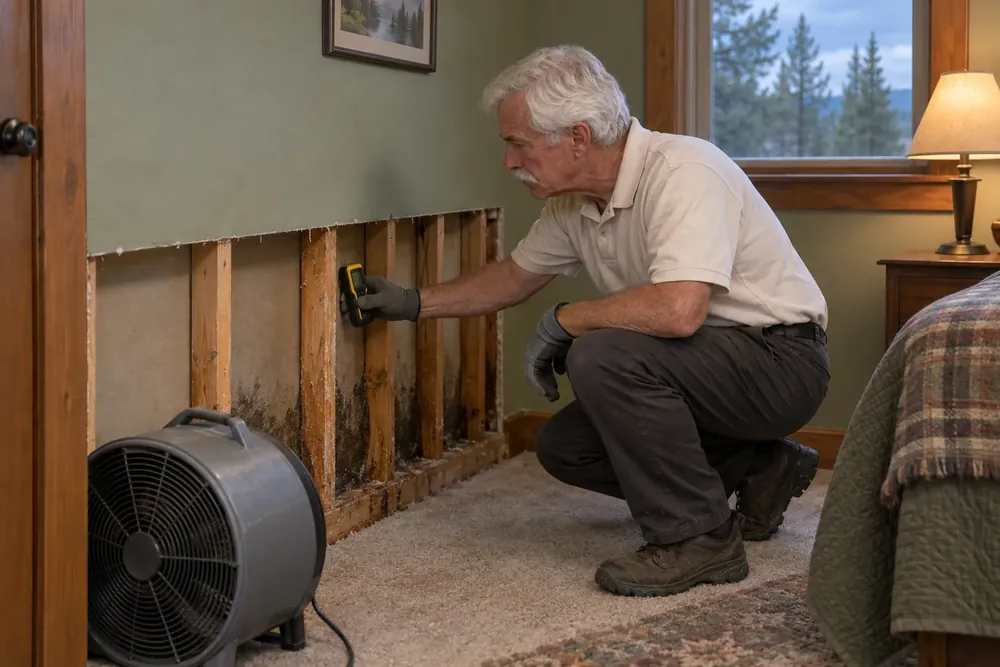
  • Moisture mapping. Your technician measures affected materials with a moisture meter and checks nearby dry areas for comparison. Readings identify damp framing beyond visible stains.
  • Access to wet cavities. For water damage repair, drywall openings expose wet insulation and framing where drying through the finished surface would leave moisture trapped.
  • Directed airflow. Air movers move air across exposed materials after contamination has been assessed. Placement follows the wet area and changes as readings improve.
  • Humidity control. Dehumidifiers remove moisture released into the room air. A thermo-hygrometer tracks temperature and humidity during the drying cycle.
  • Progress records. Repeat material readings show whether the assembly has reached its drying target. Photos and a written scope document the affected areas for insurance.

Damp materials after the water is gone

  • Call about a subfloor that remains damp after extraction.
  • Drywall feels soft or has swollen seams after a leak.
  • A musty odor persists near baseboards or inside a closet.
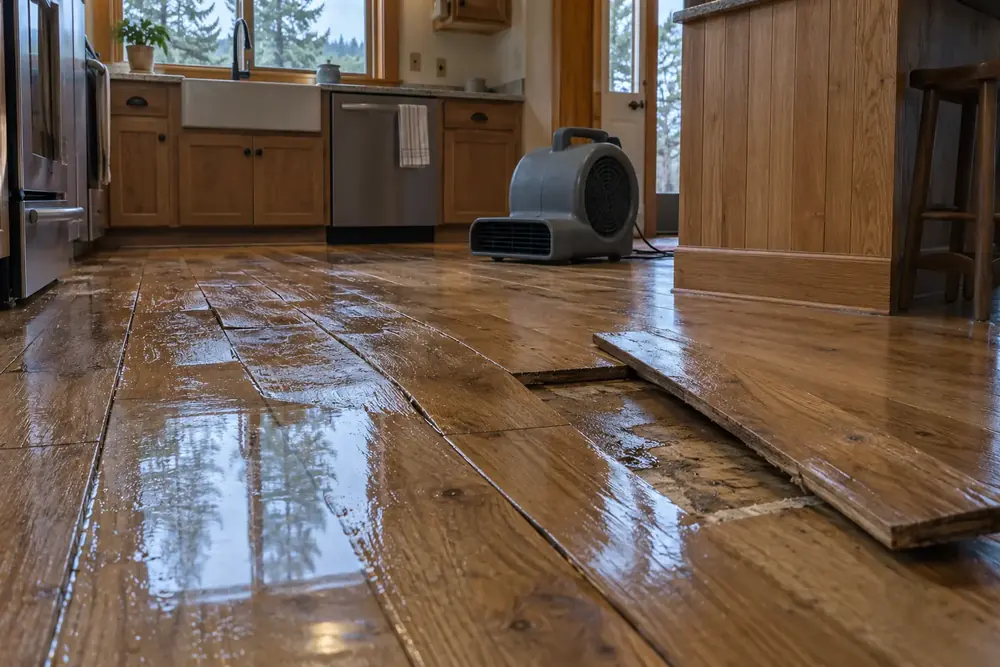
  • Floorboards cup or lift after a leak.
  • Condensation continues while walls or flooring remain wet.

From your call to final moisture readings

  1. Describe the damage. Call about the rooms affected and any active leak; share what you know during the conversation.
  2. Inspect the materials. Your technician checks the water source, contamination and moisture readings. Moisture damage repair starts with finding the full wet area and stopping ongoing water entry.
  3. Open and dry. Necessary removal exposes trapped moisture. Air movers and dehumidifiers then run under a drying plan, with repeat checks guiding adjustments.
  4. Check the endpoint. Material readings are compared with the drying targets before equipment removal. Any replacement board, flooring or trim belongs in the repair scope after drying.

Wet area and equipment time set the cost

Drying cost depends on the affected area, material thickness, cavity access and the equipment time needed to reach the drying targets. One of our local restoration partners reviews the proposed work and its price with you before drying begins.

Water damage drywall repair cost also depends on how much board and insulation need removal, followed by patching and finishing. When drying alone won't repair drywall, ceiling water damage cost includes removal of damaged board and restoring the finish overhead.

The written scope should separate drying, demolition and rebuilding so you can see which stages are included. Read the restoration cost guide for the factors behind the total.

Blank inspection sheet, pencil, moisture meter and tape measure on a damp cedar countertop

A call starts the drying plan

  • Calls answered 24/7. Describe wet flooring or walls whenever you discover the damage, including overnight.
  • Local restoration professionals. The work follows moisture from the visible surface into the affected building materials.
  • Scope and price explained. The proposed drying work and charges are discussed before equipment is placed.
  • Documentation for insurance. Photos, material readings and a written scope record the damage and the drying work for your insurer.

Keep clear of water and electrical hazards

Call from a dry area and keep people away from standing water, wet outlets and damaged electrical equipment. CDC guidance says never to enter standing water to reach a breaker panel; an electrician should handle a shutoff that requires crossing water.

Keep children away from floodwater. The CDC warns that floodwater may contain sewage, chemicals and sharp debris.

Leave suspect mold and contaminated materials undisturbed. EPA guidance says not to run fans until the water is known to be clean or sanitary. Avoid using the heating or cooling system if mold contamination is suspected, because airflow can spread it. Describe those conditions during the call.

Areas we serve around Post Falls

Our local restoration professionals serve Post Falls, Rathdrum, Coeur d'Alene and Hayden, Idaho, and Liberty Lake, Spokane Valley, Fairwood and Spokane, Washington, with structural drying for wet walls, framing and floors.

Structural Drying & Dehumidification FAQs

What does a water damage dehumidifier do?

A dehumidifier removes water vapor from room air so wet materials can continue releasing moisture. Air movers help move air across those materials, while your technician checks temperature, humidity and material readings. The machine's collection tank or drain hose shows water removal, but the building materials still need separate moisture checks.

How long does structural drying take?

Structural drying may take several days, depending on material thickness, access and how deeply water has soaked in. Your technician follows repeat moisture readings rather than deciding by touch or a fixed calendar date. A dry wall surface does not establish that the sill plate, insulation or subfloor behind it has dried.

Can wet drywall dry without replacement?

Some drywall affected by clean water can dry in place when it has no swelling and its seams remain intact. EPA guidance distinguishes that condition from damaged board needing removal. Your technician also checks the cavity and water source; contaminated water or mold requires a different cleanup assessment before a decision about keeping materials.

Can wet drywall be painted after the stain disappears?

Painting should wait until the material is dry and any mold has been addressed. During water damage restoration, drywall is checked along with the framing behind it because a fading stain says little about concealed moisture. EPA guidance advises cleaning and drying moldy surfaces before painting or caulking them.

Is structural drying the same as water extraction?

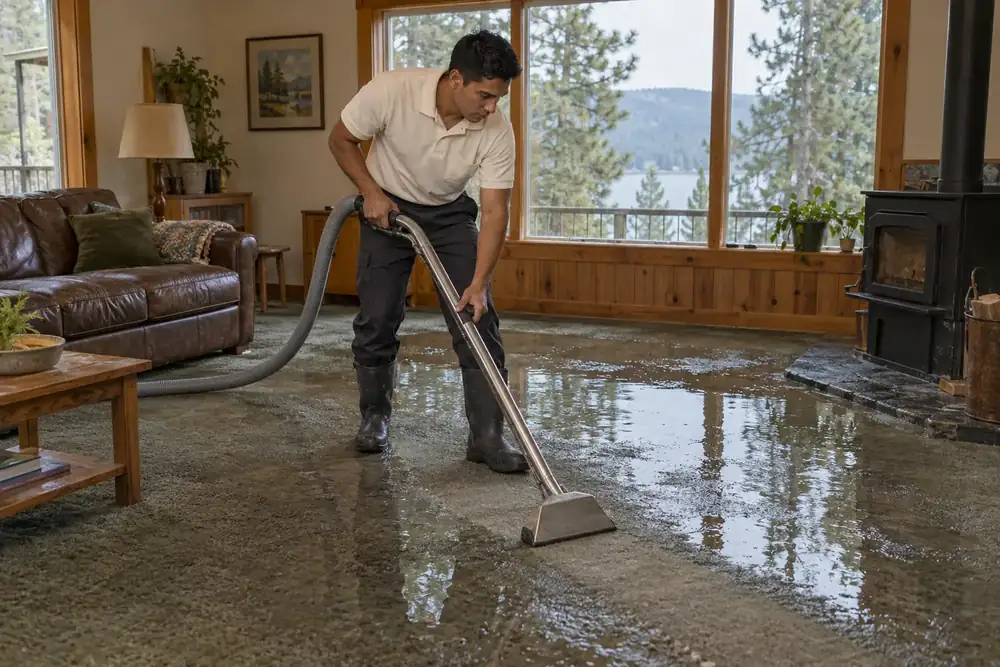
Structural drying removes moisture remaining in building materials after extraction removes standing water. An extraction wand or pump handles water that can be collected; dehumidifiers and airflow address moisture still held in the assembly. The drying plan includes repeat readings so replacement finishes are not installed over a wet subfloor or wall cavity.

Call about damp framing, soft drywall or a wet subfloor, and describe where the water has spread.

Call (208) 877-4177
Call (208) 877-4177