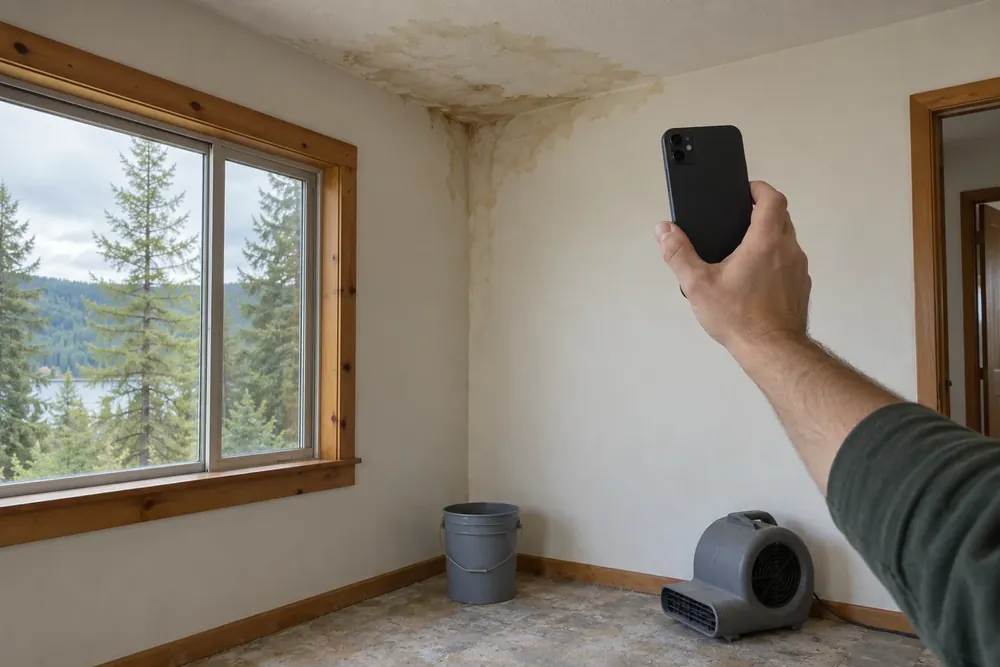
For water damage, home insurance documentation should record the visible conditions and proposed restoration work. A stained ceiling or wet subfloor shows where water reached. Call about the wet materials now; photographs, moisture readings, and a written scope document the damage without establishing coverage.
Sudden leaks and gradual damage
Photographs and inspection notes record the visible effects of a sudden plumbing failure or a leak that developed over time. An appliance hose that breaks can release water in one event. A slow leak can leave staining or softened material long before it becomes visible.
Describe what you observed without guessing how long a concealed leak lasted. Give the discovery date and explain whether water was still flowing. Finding a leak today does not establish that the damage began today.
The restoration call and written records
Call the restoration line about water removal, wet building materials, and drying. Explain which rooms are affected and whether the source is known. One of our local restoration partners will explain the proposed scope and charges before work starts.
The restoration call starts the discussion about the building and the records of its condition. Keep photographs, moisture readings, and the proposed scope together as work proceeds. You do not need a completed set of records to call about the damage.
Photographs that show the extent
Photograph the affected room and individual damaged surfaces from a safe position. For a ceiling water damage insurance claim, include the stain, nearby wall surfaces, and belongings below the affected area. Stay clear of a sagging ceiling.
Use the following checklist as work proceeds:
- Keep room views and close photographs together.
- Record when you discovered the water and what you saw.
- List damaged belongings with identifying details.
- Save receipts for measures taken to limit further damage.
Photograph damaged items from safe footing and keep those images with the room views. Tell your technician which belongings are affected so removal and documentation can be discussed together.
Records from the restoration work
For water damage restoration, insurance documentation should describe the observed damage and the work proposed. Photographs show visible conditions. Moisture readings record wet materials that may look dry at the surface. A written scope identifies areas requiring extraction, drying, or removal.
Keep the inspection records, scope, and invoices in the same file. Documentation supports your account of the loss; it does not approve a claim or establish payment.
Floodwater and plumbing leak records
Photographs and inspection notes should record how water entered and which rooms were affected. Keep observations about outside water separate from notes about a plumbing leak.
A room full of water from a broken pipe and a room flooded by outside rising water can need similar cleanup but involve different water sources. Describe how water entered rather than relying on the word flooded. The first steps after water damage guide explains immediate safety and damage control.